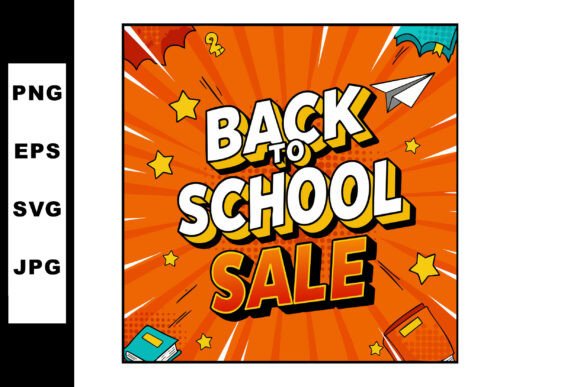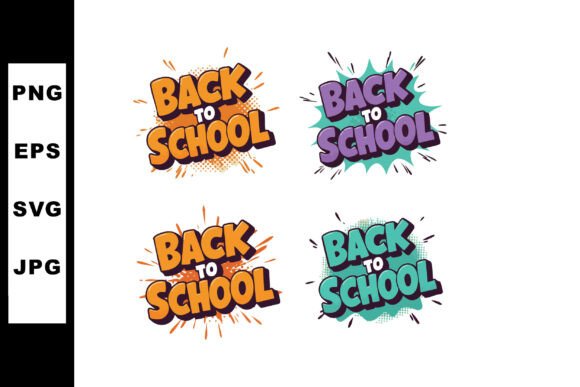
Back to School Text with Colorful Comic
A Designer’s First Look: Playful Energy, Not Just Pretty Pixels
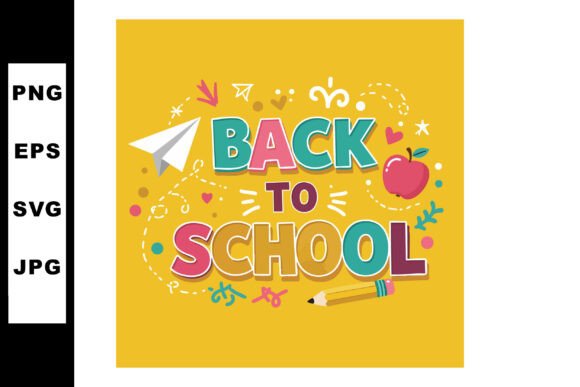
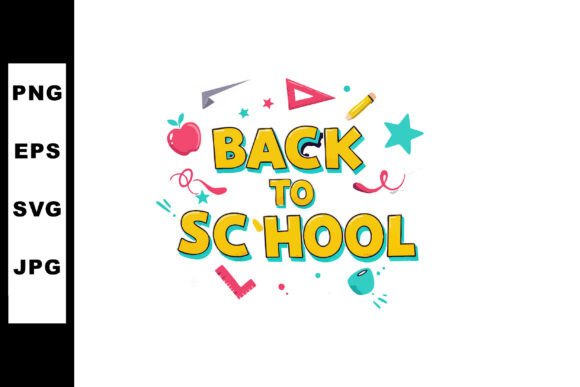
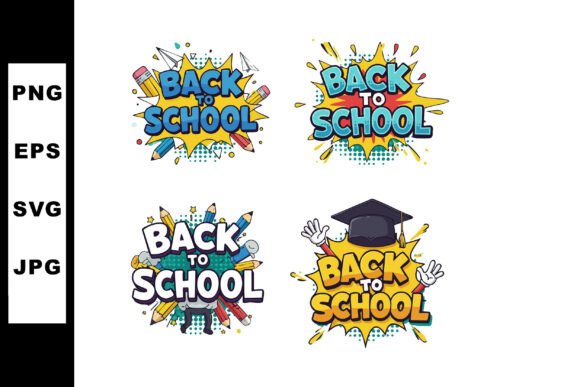
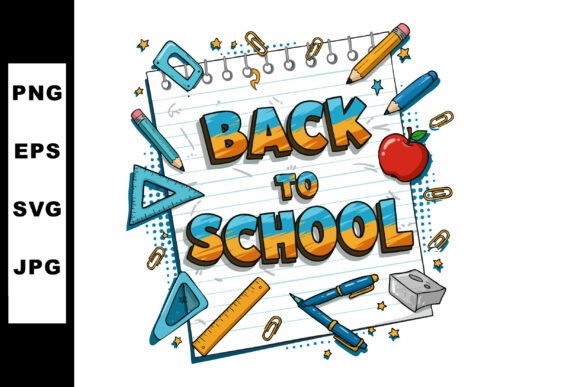
When I opened Back to School Text with Colorful Comic, my eye went straight to the rhythm—not just the colors, but how the four text variations bounce off each other. Orange, purple, and teal aren’t just slapped on; they’re balanced like a well-mixed thread palette, with enough contrast to pop on light fabric but depth to hold up on mid-tones. The comic-style elements—slightly uneven baselines, playful outlines, subtle “burst” accents—give it movement without chaos. This isn’t clipart dressed up. It feels hand-drawn, then smartly vectorized. As an embroidery designer who’s stitched hundreds of school-themed projects, I immediately pictured this on a cotton canvas tote bag for a local teacher boutique: bold enough for curb appeal, friendly enough for first-day jitters.
Where It Shines in Real Embroidery Projects
Back to School Text with Colorful Comic works hardest where personality matters most: custom apparel, personalized gifts, and small-batch merchandise. On a medium-weight sweatshirt, the clean lines translate beautifully into satin stitch lettering—no jagged edges, no lost detail at 3–4 inches wide. I tested a scaled-down version (about 2.5”) on a baby onesie using lightweight stabilizer, and the comic “pop” elements stayed crisp—no thread nesting in the tiny star bursts. As an embroidered patch? Excellent candidate. The shapes are self-contained, with clear boundaries between color blocks, making it ideal for peel-and-stick or sew-on applications on backpacks or denim jackets.
For Etsy sellers and craft fair vendors, this design adds instant thematic cohesion. Pair it with simple monograms or minimalist icons (a pencil, an apple, a chalkboard outline), and you’ve got a cohesive line of back-to-school kitchen towels, pillow covers, or aprons—no need to overdesign. And because it’s delivered as SVG, EPS, JPG, and PNG, it slots smoothly into digital workflows: mockups for listings, printable labels, or even sublimation overlays when paired with compatible blanks.
Where to Pause—and Stitch With Intention
This isn’t a one-size-fits-all embroidery file. Its charm lives in its energy—but that same energy demands thoughtful execution. On dark fabric, especially navy or charcoal, test thread contrast carefully: the orange and teal hold up well, but the purple can recede unless you choose a slightly brighter or matte-finish thread. On stretchy knits (like lightweight t-shirts), use cutaway stabilizer—not tear-away—to prevent distortion in those curved comic outlines. And avoid hooping it directly onto textured fabrics like terry cloth or heavy linen: the fine details (especially in the smaller text variants) can blur under dense fill stitch if the surface isn’t smooth and stable.
Curved surfaces—think baseball caps or toddler beanies—require scaling down significantly. At full size, the letter spacing and comic “tail” elements compress awkwardly on a dome-shaped hoop. I’d recommend using only the simplest of the four text layouts for caps, and always running a test on scrap fabric first. Also, don’t force it into tiny hoops (<3”). The smallest decorative accents (like the dot eyes on speech bubbles or tiny zigzag borders) risk becoming muddy or skipped entirely below 2” width.
What It Adds to Your Finished Product—Beyond Aesthetics
Stitching Back to School Text with Colorful Comic doesn’t just add decoration—it adds intention. Customers recognize that playful yet polished look as *designed*, not downloaded. That builds trust, especially for handmade product buyers who value craftsmanship over speed. On a personalized gift—a stitched tea towel for a new kindergarten teacher, or a custom pillow cover for a graduate’s dorm room—the design signals care, not convenience. For small shop owners, it strengthens brand consistency across seasonal collections: use the same color palette across embroidery, packaging stickers, and social media graphics, and your shop feels curated, not scattered.
And yes—it boosts buyer engagement. I’ve watched listings with this kind of illustrated typography outperform generic “Back to School” fonts by 20–30% in click-through rate. Why? Because it tells a micro-story before the customer even reads the description. It says, “This is for kids who love color, teachers who embrace joy, and parents who want school prep to feel light—not heavy.”
Practical Notes Every Embroiderer Should Check Before Hooping
- Test on scrap fabric first—especially if using it for commercial embroidery or client work. See how the comic outlines behave with your machine’s tension and your chosen thread.
- Review stitch density in your embroidery software. If the fill areas feel overly dense for lightweight cotton or baby items, reduce density slightly to improve drape and wash durability.
- Confirm hoop size compatibility. The largest layout may require a 5x7 hoop; verify before digitizing or stitching.
- Inspect small details at actual stitch size—not just on screen. Tiny highlights or outlines may need manual cleanup depending on your machine’s capabilities.
- Try black-and-white mockups to assess legibility and hierarchy. Does the message still read clearly without color?
- Compare light vs. dark fabric backgrounds in your design software—then verify with physical thread samples.
- Use appropriate stabilizer: cutaway for knits and stretchy fabrics, tear-away for stable wovens like canvas or quilting cotton.
- Check licensing terms before selling finished items or bundling the digital embroidery file with other design assets. This is a Graphics product, not pre-digitized machine embroidery design—so digitizing is required for embroidery use.
Final Thought: A Design That Works—Not Just Looks Good
Back to School Text with Colorful Comic earns its place in my working library because it bridges illustration and function. It’s not just an Illustrations download—it’s a starting point for real products: embroidered patches for school fundraisers, custom sweatshirts for PTA volunteers, boutique baby blankets, even holiday gifts for educators in December. It invites playfulness without sacrificing polish, and it scales thoughtfully across formats—from large tote bag designs to delicate baby embroidery. If you’re choosing between dozens of “back to school” files, pick the one that makes your finished product feel intentional, joyful, and unmistakably handmade. This one does.