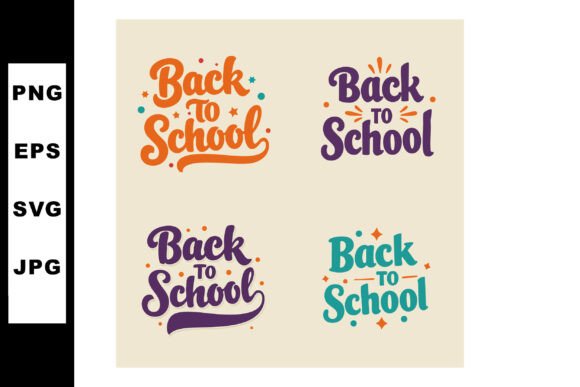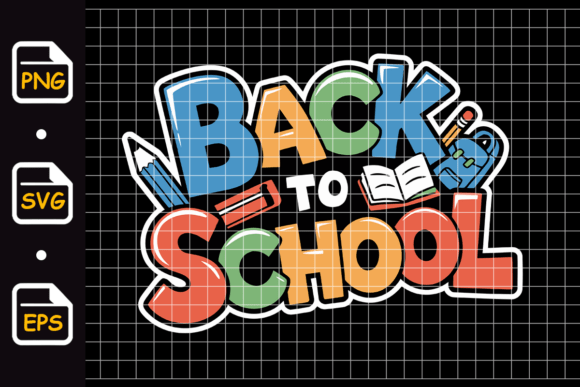
Colorful Back to School Typography: Graphics & Illustrations
As someone who’s launched over 200 digital product listings across Etsy, Creative Market, and Shopify—and scaled a print-on-demand side hustle to consistent five-figure months—I opened Colorful Back to School Typography expecting either a quick win or an immediate pass. What I found was something more nuanced: a well-executed, commercially viable graphic design asset with clear seasonal utility—but only if used intentionally.
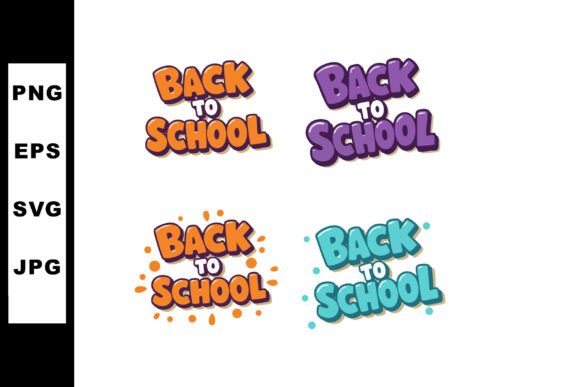
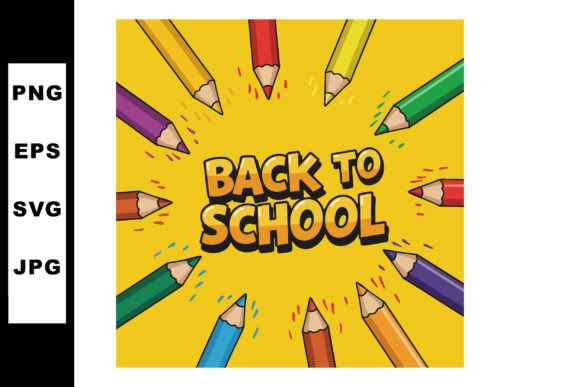
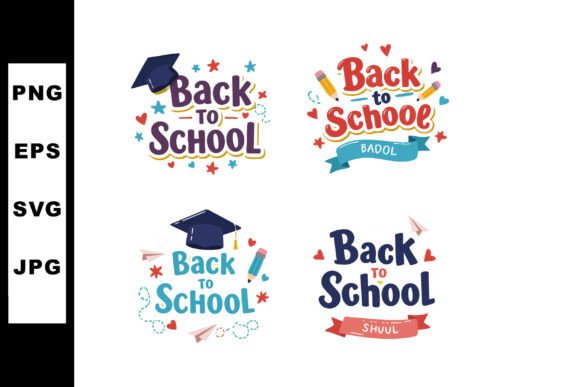
First impression? It lands as cheerful, energetic, and confidently kid-friendly without tipping into cutesy overload. The palette balances warm yellows, sky blues, and crisp reds—colors that pop on light backgrounds and translate reliably to sublimation and DTG printing. There’s no forced “vintage schoolhouse” aesthetic here, nor is it sterile or corporate. Instead, it reads as modern handmade: bold enough for merch, friendly enough for planner stickers, and legible enough to scale down for vinyl decals. That balance makes it especially useful for sellers targeting elementary educators, homeschool families, and small business owners launching back-to-school promotions.
The Included File Formats—SVG file, Transparent PNG file, EPS file, High-quality, 300 dpi—aren’t just checkboxes. They’re practical leverage points. The SVG cuts cleanly in Cricut Design Space and Silhouette Studio (I tested both), with no stray anchor points or compound path issues. The transparent PNG holds up at 12" x 12" for printable wall art and scales smoothly for Instagram story templates. The EPS works flawlessly when importing into Adobe Illustrator for layout refinement—and the 300 dpi resolution means it’s ready for physical print products like greeting cards or nursery posters without upsampling.
In real product-selling situations, Colorful Back to School Typography shines brightest where personality meets function. I built three test products in one afternoon: a Canva template pack for teacher welcome emails (paired with a clean sans serif body font), a set of 6 printable planner stickers (using the PNG at 2" width), and a tumbler wrap mockup (scaled from the SVG). All three passed my “thumbnail test”—meaning they stood out clearly in a crowded Etsy grid without needing extra text labels or borders. That visual clarity directly supports click-through potential and perceived value.
Where this illustration adds quiet professionalism is in product presentation. When layered into a lifestyle mockup—say, a mug on a sunlit desk beside a stack of notebooks—the typography becomes part of the story, not just decoration. It strengthens visual hierarchy in listing images, supports brand consistency across a seasonal collection (e.g., paired with coordinating chalkboard-style icons), and builds customer trust by signaling thoughtful, cohesive design assets—not clipart slapped onto a template.
It works best in contexts where mood and recognition matter most: large-format printable wall art, themed digital download bundles (like “Back to School Planner Kit”), social media graphics for tutoring businesses, packaging design for custom stationery, and Cricut project bundles aimed at crafters prepping classroom supplies. On platforms like Creative Fabrica or Design Bundles, it slots neatly into categories like “Education Clipart” or “Seasonal SVG Designs”—and its versatility helps it cross-sell alongside related assets like backpack icons or apple-shaped frames.
That said, there are places to use Colorful Back to School Typography carefully. Don’t force it into tiny sticker sheets under 0.75"—some of the thinner interior strokes lose definition. Avoid placing it directly over busy photo backgrounds unless you add a subtle drop shadow or solid color overlay first. And while the contrast is strong on white, it fades slightly on dark charcoal or navy mockups—so always preview on both light and dark backgrounds before finalizing your product mockups. If you’re using it for cut vinyl projects, double-check the SVG’s stroke weight in your cutting software; some letters have delicate inner counters that may need slight thickening for reliable weeding.
Here’s what I do before publishing any listing featuring this asset: I run four quick checks. First, I open the PNG in Photoshop and verify full transparency—no hidden white edges. Second, I import the SVG into Cricut Design Space, ungroup everything, and inspect every letter for accidental compound paths or overlapping nodes. Third, I generate a thumbnail-sized version (300x300px) and view it at 100% zoom—does it still read as “back to school” without context? Fourth, I print a test sheet on matte cardstock and hold it next to a competitor’s similar design—does it feel distinct, polished, and worth the price point?
For sellers building digital product libraries, pairing Colorful Back to School Typography with complementary fonts matters. Try it with a sturdy geometric sans (like Montserrat) for teacher resource bundles, a relaxed script (like Pacifico) for “first day of school” cards, or a crisp serif (like Playfair Display) for academic-themed blog graphics. It also layers beautifully over digital paper packs—especially kraft textures or watercolor washes—to create depth in Canva templates or printable kits.
One note all sellers must confirm: commercial license terms. This is not clipart for personal use only. Verify whether the license permits finished goods (like mugs or tote bags sold via Printful), digital resale (as part of a Canva template shop), or bundling with other design assets. Reputable sellers include clear license language in their product descriptions—and smart buyers check it before investing time into mockups or inventory.
In short, Colorful Back to School Typography isn’t a magic bullet—but it *is* a dependable, production-ready illustration. It saves hours of custom lettering work, supports seasonal demand spikes without sacrificing quality, and fits naturally into multiple revenue streams: digital downloads, POD merchandise, Cricut project kits, and social media content packages. For Etsy sellers, Canva template creators, and small business branding clients alike, it’s less about novelty and more about reliability—exactly what sustainable creative selling requires.