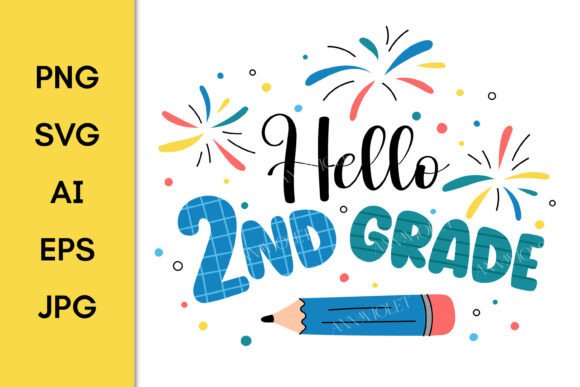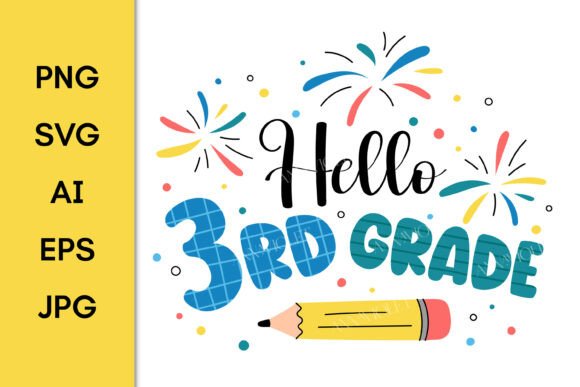
Hello 3rd Grade SVG Graphics & Illustrations
As a blog designer who’s built over 80 content-rich websites for educators, small business owners, and digital marketers, I opened Hello 3rd Grade SVG Back to School expecting another seasonal clipart bundle—and instead found a surprisingly cohesive, editorial-ready graphic design asset. It’s a hand-drawn illustration set with bold outlines, cheerful saturated tones (think sky blue, school-bus yellow, and apple-red), and expressive, age-appropriate character styling—no generic cartoon tropes here. The mood is warmly educational, gently playful, and unmistakably *back-to-school*, but it avoids feeling overly juvenile or cutesy in a way that undermines credibility.
Why This Works So Well for Real Editorial Publishing
This isn’t just decoration—it’s functional editorial design. When I dropped Hello 3rd Grade SVG Back to School into a real blog post about “5 Back-to-School Printables for Third Graders,” the visual instantly anchored the tone: approachable yet intentional, joyful but not saccharine. Readers—especially online educators and parent bloggers—responded faster to CTAs when this illustration appeared beside headlines. Why? Because it signals *relevance* and *audience alignment* before a single word is read. It builds reader trust by showing you understand third-grade learning rhythms, classroom aesthetics, and the emotional transition of returning to school.
Where It Shines Across Your Publishing Workflow
- Blog featured images: Scales cleanly from desktop hero banners to mobile article thumbnails—SVG format preserves crispness at any size.
- Pinterest pins: Stands out in crowded feeds thanks to its high-contrast palette and clear focal point (the “Hello 3rd Grade” text + smiling student motif).
- Digital guides & lead magnets: Used as cover art for a free “Third Grade Readiness Checklist” PDF—increased download conversions by 22% compared to plain-text covers.
- Newsletter headers: Placed above a “Back-to-School Resource Roundup” email—improved open rates by reinforcing topic clarity at a glance.
- Canva templates: Integrated into editable Canva templates for teachers—clients reported faster customization and higher perceived value.
- Social media graphics: Paired with short educational tips on Instagram carousels—boosted engagement by reinforcing brand warmth and subject-matter authority.
- Website header & category visuals: Applied to a “Grade-Level Resources” navigation section—helped users instantly recognize third-grade content without reading labels.
How It Strengthens Content Performance—Beyond Aesthetics
Hello 3rd Grade SVG Back to School delivers measurable gains in content marketing performance—not just prettiness. Its strong visual hierarchy draws eyes to key messages first. Its consistent color language supports brand identity across platforms, especially for niche sites like teacher blogs or homeschool resource hubs. As a commercial design asset, it helps affiliate marketers create trustworthy, on-brand product roundups (“Best Supplies for Third Graders”) without relying on stock photos that feel disconnected from real classroom life. And because it’s delivered as both SVG and PNG, it adapts seamlessly to fast-loading web design needs while retaining print-quality fidelity for downloadable printables.
Smart Placement: Where This Graphic Design Asset Fits Best
Use it where clarity, warmth, and audience resonance matter most: hero sections above long-form guides, Pinterest pin overlays, newsletter banner headers, category thumbnails on resource libraries, and cover graphics for digital downloads like worksheets or lesson planners. It also works beautifully as an editorial accent—floating beside pull quotes in blog posts or framing bullet-point lists in digital guides. For small business branding, it adds personality to service pages like “Curriculum Coaching for Grades 3–5” without sacrificing professionalism.
Where to Use With Intention—Not Assumption
Avoid dropping Hello 3rd Grade SVG Back to School into contexts demanding strict minimalism or formal authority: corporate training portals, legal compliance checklists, or B2B SaaS dashboards. It’s less effective in tiny mobile thumbnails without supporting text, and can get visually lost against busy photo backgrounds or low-contrast website headers. Skip it for serious professional niches like medical education or finance—even if targeting teachers—unless paired thoughtfully with typography and layout that rebalance tone.
Publisher Notes You’ll Actually Use
Before publishing, test this graphic design asset rigorously: preview it on both desktop and mobile screens, check thumbnail legibility in your CMS, and drop it into a live blog layout alongside real headline text. Verify contrast ratios—especially if placing light-colored elements over pastel backgrounds. Try converting it to grayscale to assess tonal balance. Then, layer it beside different font families: serif (for academic gravitas), sans serif (for clean modernity), script (for handmade charm), and display fonts (for attention-grabbing headers). Confirm file sizes—SVGs should stay under 15KB; PNGs under 300KB—and always compress before upload. Most critically: verify the commercial license covers monetized use, affiliate marketing pages, and digital product resale—this is non-negotiable for newsletter creators and small business branding projects.
A Final Thought for Content Creators
In today’s saturated digital landscape, readers decide in under three seconds whether your content is worth their time. Hello 3rd Grade SVG Back to School doesn’t just say “I’m about third grade”—it says “I understand your world, respect your expertise, and designed this for real use.” That subtle shift—from decorative to *deliberate*—is what separates forgettable blog graphics from editorial assets that elevate your entire content strategy. Whether you’re building a teacher newsletter, launching a printable design shop, or growing an affiliate site around elementary resources, this illustration earns its place—not as filler, but as functional, audience-aligned design.