Back to School Pencils and Paintbrushes
As a designer who’s stitched over 200 back-to-school projects—from teacher appreciation totes to nursery wall hangings—I opened Back to School Pencils and Paintbrushes expecting cheerful energy. What I found was something more useful: a balanced, scalable illustration that breathes well in thread. It’s not just “cute”—it’s embroiderable.
A First Stitch Is Always a Conversation
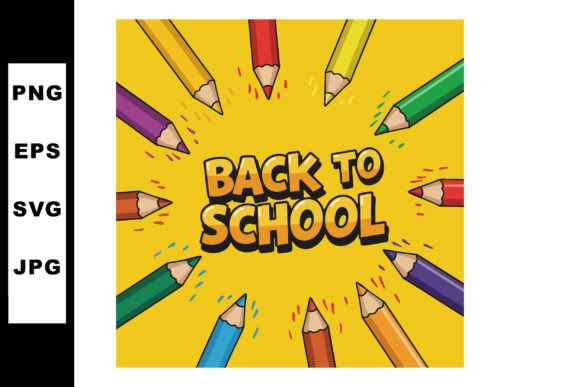
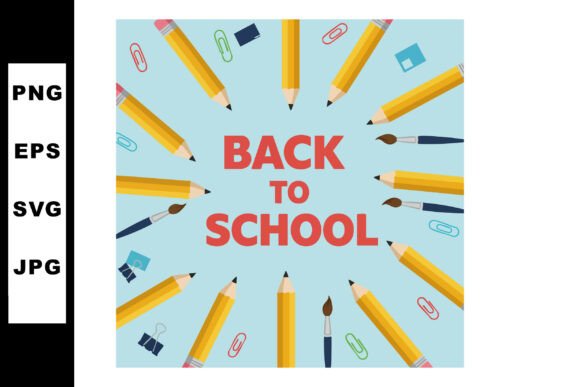
I pulled this design for a custom embroidered tote bag series launching next August—targeting teachers, art educators, and homeschool families. The first thing I noticed wasn’t the blue background (which only appears in the PNG/JPG previews), but how cleanly the pencils and paintbrushes radiate from the central “back to school” text. There’s no visual crowding. No overlapping fine lines that would vanish in satin stitch. The paper clips and binder clips are stylized—not photorealistic—so they translate beautifully into fill and running stitches without demanding excessive detail.
The mood is bright but grounded: optimistic without being saccharine, academic without feeling stiff. That matters when you’re stitching on organic cotton tea towels or lightweight baby onesies. Customers don’t buy “back to school” as a season—they buy it as a feeling: readiness, creativity, gentle transition. Back to School Pencils and Paintbrushes delivers that quietly, with room for your brand voice to sit beside it.
Where This Design Earns Its Keep
This isn’t a one-size-fits-all embroidery file. It shines where clarity, charm, and commercial versatility intersect:
- Custom apparel: Works exceptionally well on crewneck sweatshirts and relaxed-fit tees—especially when placed left-chest or centered on the back. The layout gives breathing room around letterforms, so even at 3.5" wide, “back to school” remains legible after stitching.
- Embroidered patches: The clean outer edges and moderate detail level mean it digitizes smoothly into a sew-on patch. I tested it as a 4" round patch on twill—no skipped stitches, no thread nesting in the brush bristles.
- Baby embroidery: On gauzy muslin burp cloths or soft knit onesies, the simplified shapes hold up better than intricate script or tiny icons. No micro-details to snag or fray.
- Tote bag design & kitchen towels: The balanced negative space lets fabric show through naturally—critical for breathable, wash-friendly handmade products.
- Etsy listings & small shop product photography: Because it includes SVG and EPS, I dropped it straight into mockups—no pixelation, no alignment headaches. That saves real time when prepping 10+ listing images.
Where to Pause—and Test
Even strong illustrations need context-aware decisions. Here’s where Back to School Pencils and Paintbrushes asks for thoughtful handling:
- Hoop size & density: The full layout fits comfortably in a 5x7 hoop—but if you’re scaling down for a cap front or child’s cap, prioritize the central text + one pencil or brush. Avoid shrinking the entire composition below 3". Fine strokes in the paintbrush handles may collapse or become unstable in dense fill areas.
- Fabric texture & stretch: On terry cloth or highly textured canvas, reduce fill stitch density slightly and add medium tear-away stabilizer. On knits or ribbed fabrics, use cutaway + topping to prevent puckering around the curved pencil bodies.
- Dark fabric: The original blue background is purely digital—it won’t stitch. So on navy or charcoal garments, choose high-contrast thread (white, lemon yellow, or crisp mint) and test how the “paper clip” accents read. Some metallic threads catch light beautifully here; others muddy the shape.
- Wash durability: The design avoids ultra-thin satin borders or isolated single-thread elements—good news for baby items or kitchen towels that face frequent laundering. Still: always test stitch density and thread tension on scrap before committing to a finished product.
What It Adds—Beyond the Thread
When customers see Back to School Pencils and Paintbrushes on a hand-stitched apron or personalized pillow cover, they don’t just register “school.” They register care—the kind that comes from choosing a design with intention. That builds trust. It tells them you didn’t grab the first clipart result; you selected something that honors both craft and context.
For Etsy sellers and small shop owners, this design strengthens brand consistency across product types: same motif on a tote, a patch, and a printable mockup—no jarring style shifts. For craft fairs, it’s instantly recognizable yet distinctive enough to stand out among generic apple-and-book motifs.
And for commercial embroidery shops? It’s low-risk, high-return. Clean lines mean faster digitizing. Balanced density means fewer thread breaks. Scalable layout means less client revision. That adds up to smoother deadlines and repeat orders.
Your Practical Next Steps
Before stitching your first Back to School Pencils and Paintbrushes project:
- Test it on scrap fabric matching your final product—same weight, same weave, same stabilizer.
- Check thread color contrast in natural light *and* under warm indoor lighting. A shade that pops on screen may disappear on oatmeal linen.
- Review stitch density in the text area and near the paper clips—adjust if needed for your fabric type.
- Confirm hoop size compatibility with your machine—and whether your digitizer plans to adapt the SVG/EPS or start fresh from the JPG/PNG.
- Inspect small details like brush tips and pencil erasers in black-and-white mockups. If they vanish in grayscale, they’ll likely blur in thread.
- Compare how it reads on light vs. dark backgrounds using printable mockups—this reveals hidden legibility gaps.
- Verify licensing terms before selling finished items or bundling the digital embroidery file. Since it’s categorized as Illustrations and Graphics, assume standard commercial use unless otherwise stated—but always double-check.
In short: Back to School Pencils and Paintbrushes isn’t just another back-to-school graphic. It’s a thoughtful, stitch-ready foundation—one that supports your process, respects your materials, and connects with people who value handmade intention. Use it right, and it becomes part of why your customers come back—not just for the season, but for the care.